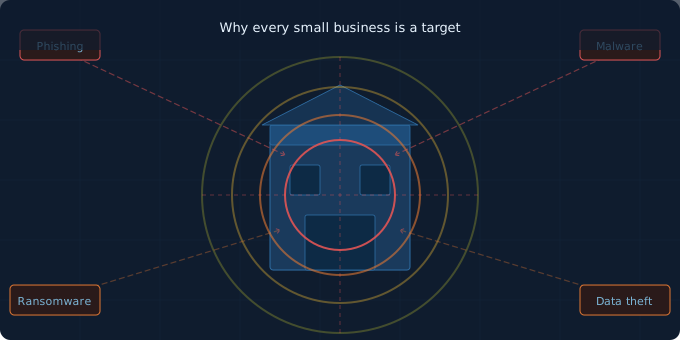

"Over 40% of all cyberattacks target small businesses — yet fewer than 15% of SMBs feel confident in their ability to defend themselves."
Many small business owners assume hackers only go after large corporations. After all, why would a cyber criminal bother with a local accounting firm or a 10-person retail shop? The reality is quite the opposite, small businesses are among the most targeted organizations in the world, precisely because attackers know that most lack dedicated security teams.
The numbers don't lie
Attackers use automated tools that scan the internet for vulnerable systems around the clock. They're not manually picking targets—they're running scripts that probe millions of IP addresses simultaneously. If your business has an internet connection, you're on their radar.
Consider what a typical small business holds:
- Customer payment and credit card information
- Employee personal records and Social Security numbers
- Bank account and ACH routing details
- Client databases and confidential contracts
- Access credentials to third-party platforms
Why attackers love small businesses
A $10,000 ransom demand may be devastating to a small business but represents trivial effort when deployed via automation against thousands of targets. Here's the attacker's math:
1,000 automated scans per hour
× 2% success rate
= 20 potential victims per hour
× $10,000 average ransom
= $200,000 potential daily revenue
You don't need to be interesting, you just need to be vulnerable.
Three first steps every small business should take
- Enable MFA on all accounts - especially email and banking. This one step blocks over 99% of automated account takeover attempts.
- Back up your data and test restores - a backup you've never tested is not a backup. Run a quarterly restore drill.
- Patch your software - most attacks exploit known vulnerabilities that already have fixes available. Turn on auto-updates.
The bottom line
Cybersecurity doesn't require a massive budget or a team of engineers. It starts with awareness and a few disciplined habits. The businesses that get breached are often those that assumed it wouldn't happen to them. Don't be one of them.
Ready to get protected? Contact us today for a free SMB security assessment. We'll identify your top three risks in under an hour.